
Think about how often you search for something online before making a decision — your customers are doing the exact same thing. The question is: does your business actually appear when they go looking? And if it’s not, there’s a good chance your competitors are. That’s exactly why SEO (Search Engine Optimisation) and GEO (Generative Engine Optimisation) matter so much today. In many ways, it’s this generation’s Yellow Pages.
If you’re unsure what a search engine is, think Google, Yahoo or Bing. Search engines gather information from a range of places including reviews, websites and your own content to decide what they believe is the best answer for a user’s search. Their entire business relies on giving users the best answers possible so people continue using their platform.
The information on your website tells Google what your business does and where you are located. Reviews help Google decide whether your business can be trusted. Mentions and links from other credible websites help strengthen that trust even further.
Now let’s talk about GEO.
GEO is essentially SEO for the AI era. Tools like ChatGPT, Gemini and Google AI are increasingly recommending businesses directly to users. GEO helps your business become one of the businesses these AI tools trust enough to mention.
The good news? You do not need to become a tech expert overnight. Small, consistent improvements can make a massive difference over time — and most small businesses are still barely doing the basics.
Below are six easy ways to strengthen your SEO and improve your GEO.
1. Your Website Is Your Digital Shopfront
Your website is one of the biggest things Google and AI tools use to understand your business, so the more useful and relevant information you give them, the better.
First, make sure you have all your required content in place — things like your services, locations, contact details, FAQs and clear explanations of what you actually do. This helps search engines confidently understand your business and can help you appear for more relevant searches.
Then build out good general content like blogs, news, updates and events so your website stays active and fresh. This type of content gives Google more pages to index and creates more opportunities for customers to discover your business online.
But here’s where businesses can really stand out: unique thought leadership content.
Instead of writing generic articles everyone else has already written, create content that is highly relevant to your area and ideal customer. For example, if you’re a physio on the Northern Beaches, create content around surf injuries, shoulder mobility for swimmers or recovering after a big weekend of waves. If you’re in Texas, maybe you talk about NFL injuries or local sports recovery.
Google and AI tools love locally relevant expertise because it proves you genuinely understand your audience — and that can turn into more visibility, more trust and ultimately more customers.
Another important piece is internal linking — linking between pages on your own website and also linking out to credible sources where relevant. For example, if you mention a health statistic, link to the actual study or trusted medical source.
Finally, work on getting external links from other credible websites back to yours. These backlinks act like trust signals online and can help improve both your rankings and authority.
One sneaky ninja tactic? If your business has genuine media mentions, awards or public credibility, creating a factual Wikipedia page can become a strong authority signal. Wikipedia is considered highly credible by search engines and AI tools — just make sure it’s genuine, informative and not overly promotional or it may get removed.
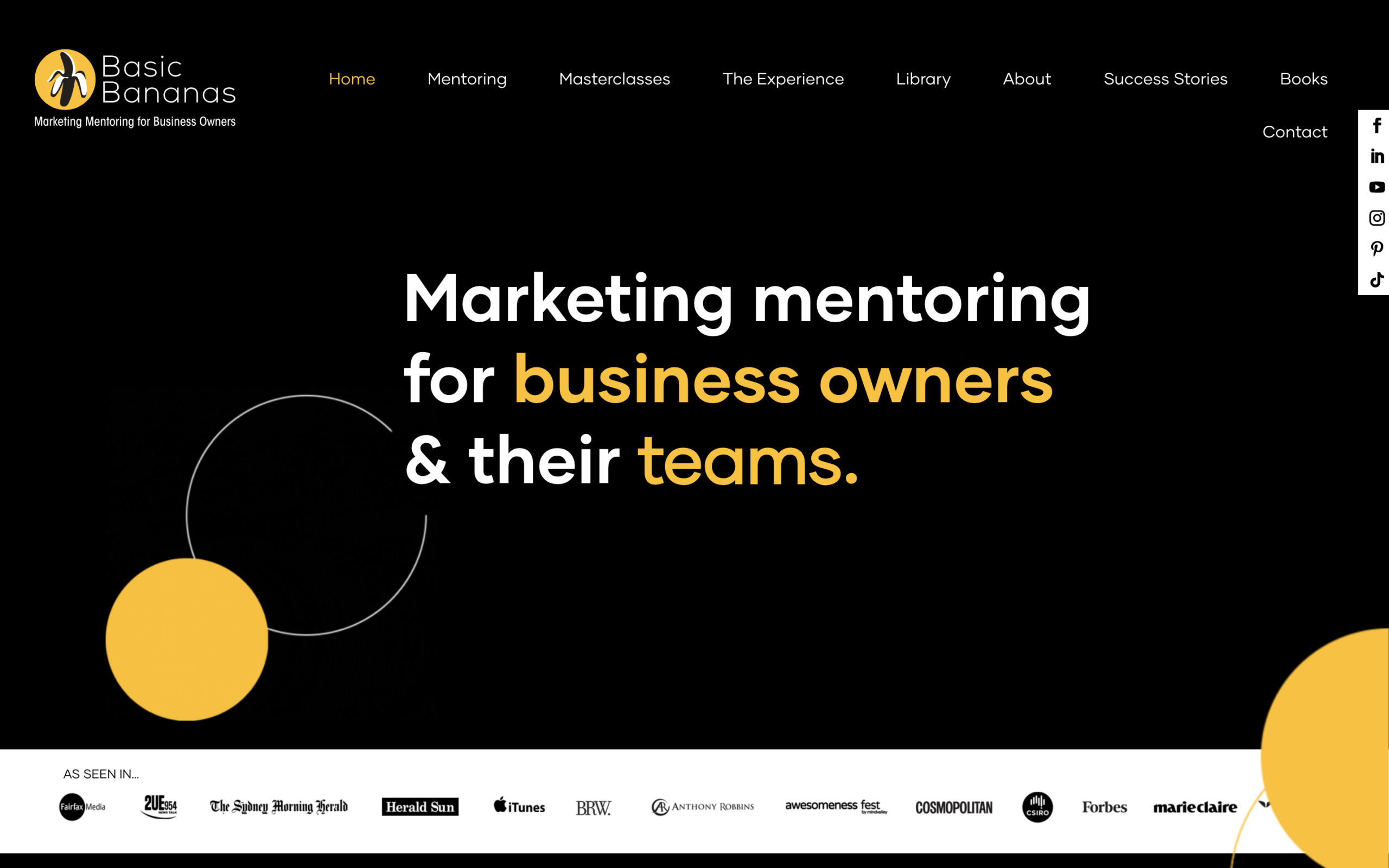
A simple example here is the Basic Bananas homepage — front and centre it clearly explains exactly what the business does and who it helps. That clarity makes it easier not only for customers to understand the business, but also for Google and AI tools to confidently categorise and recommend it online.
2. Use The Words Your Customers Actually Search (Keywords)
SEO keywords are simply the words and questions your ideal customers type into Google or AI tools when looking for help, products or services online.
The better your website content matches those searches, the more likely your business is to get found.
Keywords can include:
- your location,
- your service,
- your product,
- your niche,
- or the exact problem your customer is trying to solve.
Here are some sneakily good places to add them:
- The title of each website page
Example: “Basic Bananas | Marketing Mentoring For Small Businesses” - The URL of each page
- Image and video file names
Instead of “IMG_2828.jpg”, try “northshore-sydney-mirrors-frame-silver.jpg” - Headings on each page
- Body text
The more consistently your website talks about the products, services and problems you solve, the easier it is for Google and AI tools to understand what your business should rank for.
Just don’t overdo it and make your website painful to read. Write for humans first.
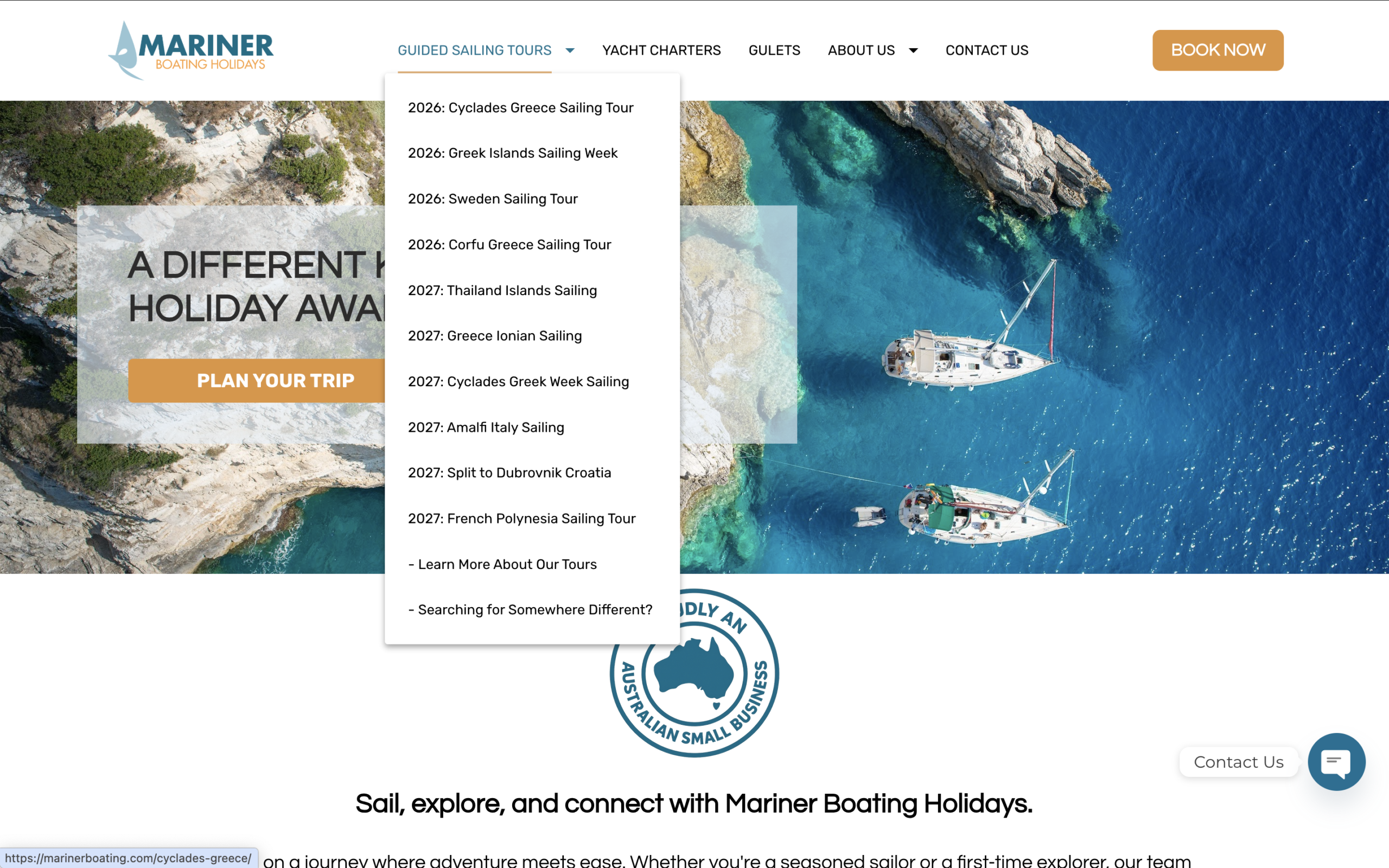
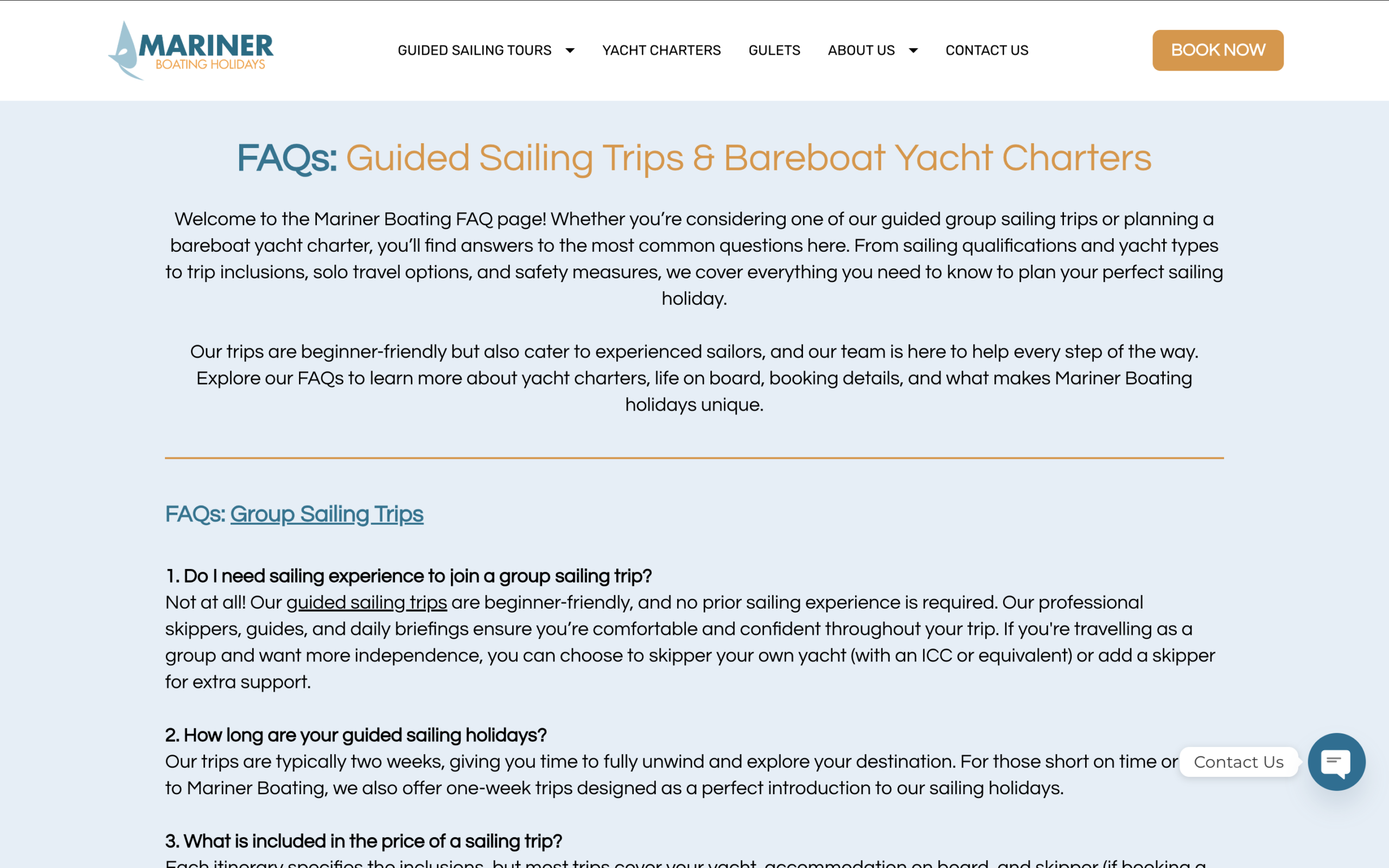
Basic Bananas member Mariner Boating is a great example of using keywords naturally through helpful content. Instead of only trying to sell boating services, they’ve created detailed articles around topics their audience is already searching for, like boating in the Cyclades, Greece. This helps Google and AI tools understand their expertise in boating and increases their chances of appearing in searches related to boating destinations, travel and sailing experiences.
3. Google Reviews = Online Trust Signals
Google Reviews can quietly become one of your best lead generators because they build trust before customers even contact you.
The rating and volume of your reviews help search engines and AI tools decide whether your business is trustworthy. Reviews also help them better understand your business through the words customers repeatedly use.
For example, if you’re a physio and someone leaves a review saying:
“Five stars, great service. Injured my hip surfing and the team at Bondi Physiotherapy were fantastic at understanding my injury and minimising my time out of the water.”
Google and AI now understand:
- you’re located in Bondi,
- you help with surf-related injuries,
- customers trust you,
- and your business is relevant to that niche.
That means when someone searches for surf injury physios in Bondi, your business is more likely to appear.
Sneaky ninja tip:
Reply to all your Google Reviews and naturally include your keywords where appropriate.
For example:
“Thanks for the kind words Tom! Here at XYZ Clothing our goal is to provide high-quality streetwear clothing in Sydney.”
Those repeated trust and relevance signals add up over time.
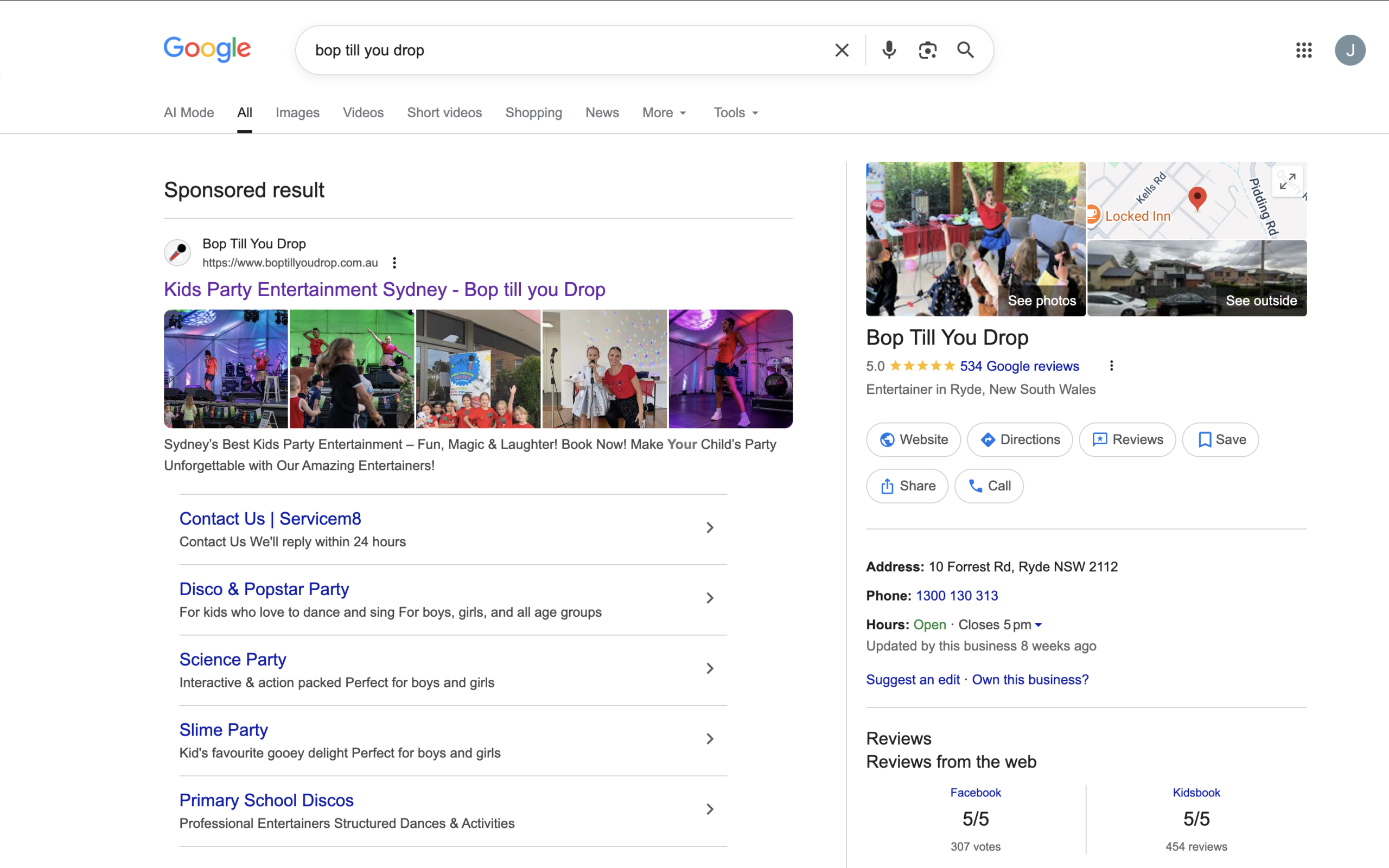
Bop Till You Drop, a member of the Basic Bananas community, is a fantastic example of the power of Google Reviews, with over 531 reviews and a near-perfect 5-star rating. That volume of positive reviews sends a huge trust signal to both Google and AI tools, helping strengthen their visibility and credibility online.
https://boptillyoudrop.com.au/
4. Help Google & AI Understand Your Business
Schema markup (also called structured data) is like giving Google and AI tools a cheat sheet about your business.
Instead of making them guess what your website means, you tell them directly — helping your business become easier to understand, rank and recommend online.
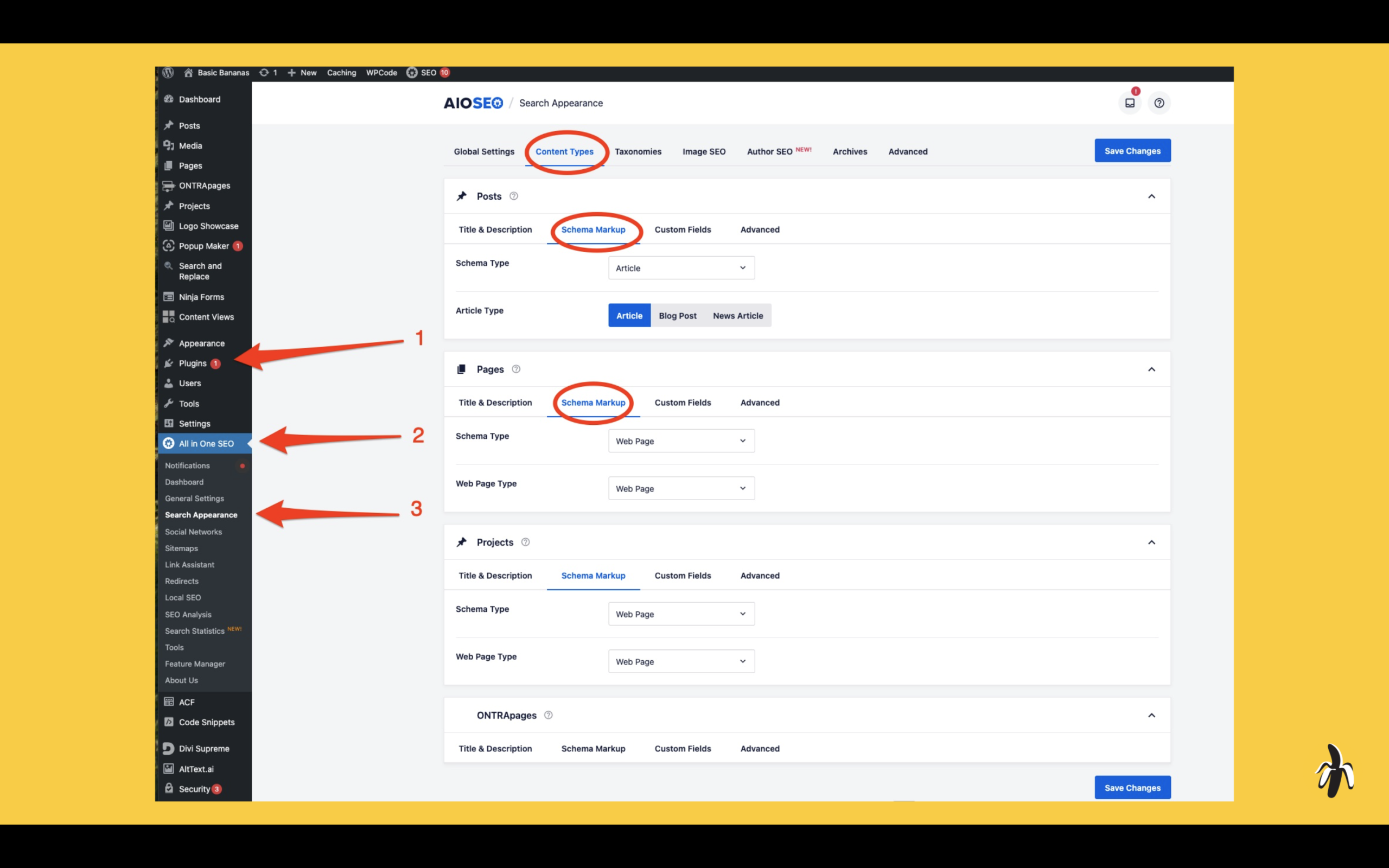
Now if you’re not familiar with how your website is built, you may need to ask your website designer for help. But if you’re willing to have a go yourself, head into the backend of your website and review your schema markup.
Add detailed information about:
- your services,
- location,
- FAQs,
- articles,
- reviews,
- team members,
- contact details,
- products,
- and service areas.
The clearer your website is for search engines and AI tools to understand, the more likely your business is to appear in search results and AI-generated recommendations.
And remember — you can always ask AI to help you create schema markup too.
Here’s a behind-the-scenes example from the Basic Bananas website backend showing where schema markup can be added. This type of structured data acts like a cheat sheet for Google and AI tools — helping them better understand your services, pages and website content so your business becomes easier to rank and recommend online.
5. Let AI Audit Your Business For Free
One of the easiest ways to improve your SEO and GEO today is simply to ask AI what it thinks of your business.
AI tools can quickly identify:
- missing SEO opportunities,
- weak content,
- keyword gaps,
- GEO improvements,
- trust signals you’re missing,
- and quick wins you can implement immediately.
Try using this prompt:
“Act as a world-class SEO, GEO and AEO consultant specialising in helping small businesses get found online more consistently.
Analyse our business like you have been hired as our digital growth strategist. Review our website, content, branding, SEO, social media presence and how easily AI tools like ChatGPT can understand and recommend our business.
Please identify:
- Why customers may not currently be finding us online
- The biggest SEO mistakes or missed opportunities
- How to improve our Google rankings
- How to improve our visibility in AI-generated answers
- What keywords we should target
- What content we should create
- Quick wins we could implement immediately
Please keep the advice practical, actionable and easy to understand for a small business owner.
Business details:
[Insert details]”
6. Answer The Questions Your Customers Are Already Asking
One of the easiest ways to improve your GEO is by adding FAQs and question-based content throughout your website. Why? Because people now search using full questions inside AI tools like ChatGPT and Google AI. Instead of typing “Italian restaurant Sydney”, someone might ask “Where’s the best family-friendly Italian restaurant in Sydney?” or “What’s a good Italian restaurant for a date night near me?”. The businesses that clearly answer these types of questions on their website are far more likely to appear in AI-generated answers.
A simple way to do this is by adding FAQ sections to your pages, using question-style headings in blogs and writing content the same way your customers naturally speak and search online. Every question you answer creates another opportunity for Google and AI tools to understand, trust and recommend your business.
Quick 30-Minute SEO Wins
If you’re feeling overwhelmed, start here:
- Add keywords to your page titles
- Rename your website images
- Make it a goal to collect 5 new Google Reviews this week
- Add 3 frequently asked questions to your website
- Create one useful blog article for your customers
- Ask ChatGPT to audit your website
- Add clear location and service information to your pages
You do not need to do everything overnight. The businesses winning online are usually just the ones consistently improving over time.
Small actions done consistently can create huge long-term results.
The businesses that become easiest for Google and AI to understand are increasingly becoming the businesses recommended first.
The good news? Most small businesses are still barely doing the basics — which means even small improvements now can create a massive competitive advantage later.
We’ve got plenty more practical marketing strategies to help grow your business inside the Clever Bunch Program. If you’d like support implementing ideas like these, check it out.